Fashion in the Year of Independence


When most people picture America in 1776, they imagine powdered wigs, tricorn hats, and the signing of the Declaration of Independence. But what did everyday Americans actually wear during the birth of the United States?
The answer depends on who they were. Wealthy merchants dressed very differently from frontier farmers, enslaved people, Indigenous nations, and Continental soldiers. Clothing in 1776 wasn’t just about fashion—it revealed a person’s occupation, social class, wealth, and even political beliefs.
Let’s step back into Revolutionary America and explore how people dressed during one of the most important years in American history.
Fashion Reflected Social Status
In 1776, clothing was expensive.
Unlike today, garments were handmade by skilled tailors or sewn at home. A well-made coat or dress could last decades and was often repaired, altered, or passed down through generations.
Because fabric itself was costly, wardrobes were surprisingly small. Most people owned only a handful of outfits, with one reserved for church, weddings, or other special occasions.
What Men Wore


A typical colonial man’s wardrobe included:
Linen Shirt
Every outfit began with a loose linen shirt featuring a high collar and gathered sleeves. It served as an undergarment and protected expensive outer clothing from sweat.
Waistcoat
A waistcoat (vest) was worn over the shirt. Wealthy men favored colorful silk or embroidered waistcoats, while working men often wore simpler linen or wool versions.
Breeches
Instead of long pants, men wore breeches that ended just below the knee and fastened with buttons or buckles.
Stockings
Long wool or silk stockings covered the lower legs and were held up beneath the breeches.
Coat
The iconic long frock coat featured large cuffs, wide lapels, and decorative brass or pewter buttons. Formal coats could be richly embroidered, while everyday coats were plainer and more practical.
Shoes
Leather shoes with buckles were common in towns, while farmers and laborers often wore sturdier work shoes or boots.
What Women Wore


Women’s clothing emphasized practicality as much as style.
Shift
The first layer was a lightweight linen shift, worn next to the skin and washed frequently.
Stays
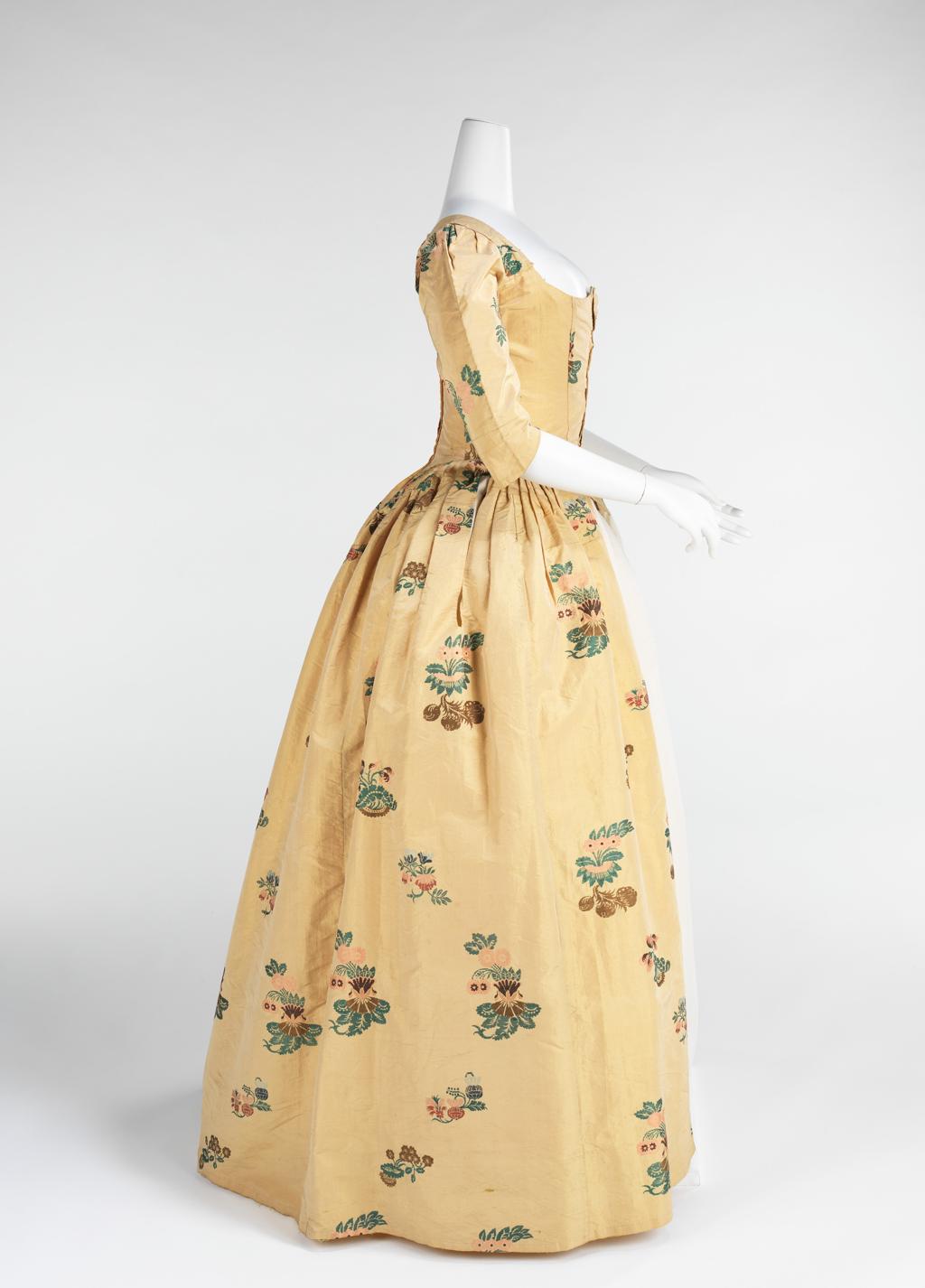
Most women wore lightly boned stays (the predecessors of Victorian corsets) that supported posture and created a smooth shape rather than an exaggerated waist.
Petticoats
Several petticoats added warmth and volume beneath the outer skirt.
Gown
The outer gown varied according to wealth. Working women wore plain linen or wool dresses, while affluent women selected imported silk, fine cotton, or brocade fabrics.
Apron
Aprons weren’t merely decorative—they protected clothing while cooking, cleaning, spinning, or gardening.
Cap or Bonnet
Married women often covered their hair with linen caps, while bonnets protected against the sun outdoors.
Soldiers of the American Revolution


The newly formed Continental Army had begun standardizing uniforms, though shortages meant many soldiers still wore civilian clothing.
Typical features included:
- Blue wool coats
- Buff or colored facings depending on regiment
- White linen shirts
- Breeches
- Wool stockings
- Black tricorn hats or simple felt hats
- Leather cartridge boxes and cross belts
Because supplies were inconsistent, soldiers frequently patched, repaired, and mixed military clothing with civilian garments.
Frontier Clothing
Life on the frontier required durability over fashion.
Settlers commonly wore:
- Linen hunting shirts
- Leather leggings
- Moccasins
- Wool trousers or breeches
- Fur hats during winter
- Homespun garments made from locally produced wool or flax
Practicality always came before style.
Indigenous Clothing


Across North America, Indigenous nations maintained rich and diverse clothing traditions that reflected local environments, cultural practices, and craftsmanship.
Garments varied widely but often included:
- Deerskin leggings
- Breechcloths
- Dresses made from tanned hides
- Moccasins
- Fur robes
- Woven belts and decorative beadwork or quillwork
European trade also introduced wool blankets, cloth, metal ornaments, and glass beads, many of which were incorporated into traditional styles while preserving distinct cultural identities.
Clothing of Enslaved Africans
Enslaved men, women, and children generally had little control over what they wore.
Many were issued only one or two sets of coarse linen or wool clothing each year, often made from inexpensive fabrics designed for durability rather than comfort.
Despite these restrictions, enslaved communities found ways to express identity through careful tailoring, headwraps, accessories, and garments made or altered during their limited personal time.
The Role of Wigs and Powder


Powdered wigs were fashionable among wealthy men throughout much of the 18th century.
However, by 1776:
- Older gentlemen often still wore wigs.
- Younger men increasingly preferred their natural hair, tied neatly into a queue.
- Powdered wigs remained common among judges, lawyers, and government officials.
Not everyone in colonial America wore a wig—far from it.
Homespun Became Patriotic
As tensions with Britain grew, clothing took on political meaning.
Many Americans deliberately wore homespun cloth woven in the colonies instead of imported British textiles.
Producing and wearing locally made fabric became a visible act of resistance, supporting colonial industry and reducing reliance on British goods. A simple homespun coat or dress could make a powerful political statement.
Colors and Fabrics
Popular materials included:
- Linen
- Wool
- Silk (for the wealthy)
- Leather
- Homespun cloth
- Imported cotton (still relatively uncommon)
Common colors:
- Brown
- Blue
- Gray
- Green
- Cream
- Deep red
- Black for formal occasions
Natural dyes from plants, minerals, and insects created a rich range of shades.
Fun Facts
- Buttons were often made from brass, pewter, wood, bone, or covered fabric.
- Most garments were sewn by hand—sewing machines wouldn’t appear for another 60 years.
- A wealthy gentleman’s suit could cost several months’ wages for an average laborer.
- Children often wore simplified versions of adult clothing rather than distinct “kids’ fashion.”
- Clothing was frequently repaired, patched, and remade, making garments valuable family possessions.
Final Thoughts
The clothes Americans wore in 1776 reflected a world very different from today. Every garment required significant time and skill to produce, and clothing served practical, social, and even political purposes.
Whether it was a merchant in a tailored frock coat, a farm woman in a homespun gown, a Continental soldier in a blue uniform, or a frontier settler in buckskin, the fashion of Revolutionary America tells the story of a nation taking shape.
Understanding how Americans dressed during the year of independence offers a glimpse into everyday life beyond the famous battles and political speeches. Their wardrobes reveal the values, hardships, craftsmanship, and diversity that helped define the earliest years of the United States.