Before Corsets Became a Symbol of Women’s Fashion, Men Wore Them Too


When most people hear the word “corset,” they immediately picture Victorian women with impossibly tiny waists.
But for nearly 300 years, men also wore corsets.
From kings and aristocrats to military officers and fashionable gentlemen, corsets were once considered a sign of elegance, discipline, and status. In fact, some of Europe’s most influential men wore them daily—not as costumes, but as essential pieces of clothing.
The story of men’s corsets reveals how ideas about masculinity, beauty, and fashion have changed dramatically over the centuries.
What Was a Corset?
A corset is a fitted undergarment designed to shape the torso.
Made from layers of sturdy fabric reinforced with whalebone, reed, wood, or later steel, corsets could:
- Create a slimmer waist
- Improve posture
- Support the back
- Smooth clothing
- Produce a fashionable silhouette
While today they’re associated with women’s fashion, early corsets were worn by both men and women.
Why Did Men Wear Corsets?
1. The Fashionable Male Silhouette


During the 18th and early 19th centuries, the ideal male figure emphasized:
- Broad shoulders
- A narrow waist
- An upright posture
- A smooth chest
- Perfect tailoring
A corset helped achieve all of these goals.
Rather than creating an exaggerated hourglass figure, men’s corsets typically produced a subtle V-shaped silhouette that made coats fit more elegantly.
2. Perfect Posture
Corsets naturally encouraged wearers to stand straight.
In an era when posture reflected education, refinement, and social class, slouching was considered uncivilized.
Military officers, politicians, and aristocrats often relied on corsets to maintain an erect, confident appearance during long public events.
3. Better Fit for Tailored Clothing
Before stretch fabrics existed, clothing depended entirely on precise tailoring.
Corsets created a consistent body shape that allowed expensive coats and uniforms to hang perfectly.
Tailors could cut garments much closer to the body when clients wore corsets.
The Prince Who Made Men’s Corsets Fashionable


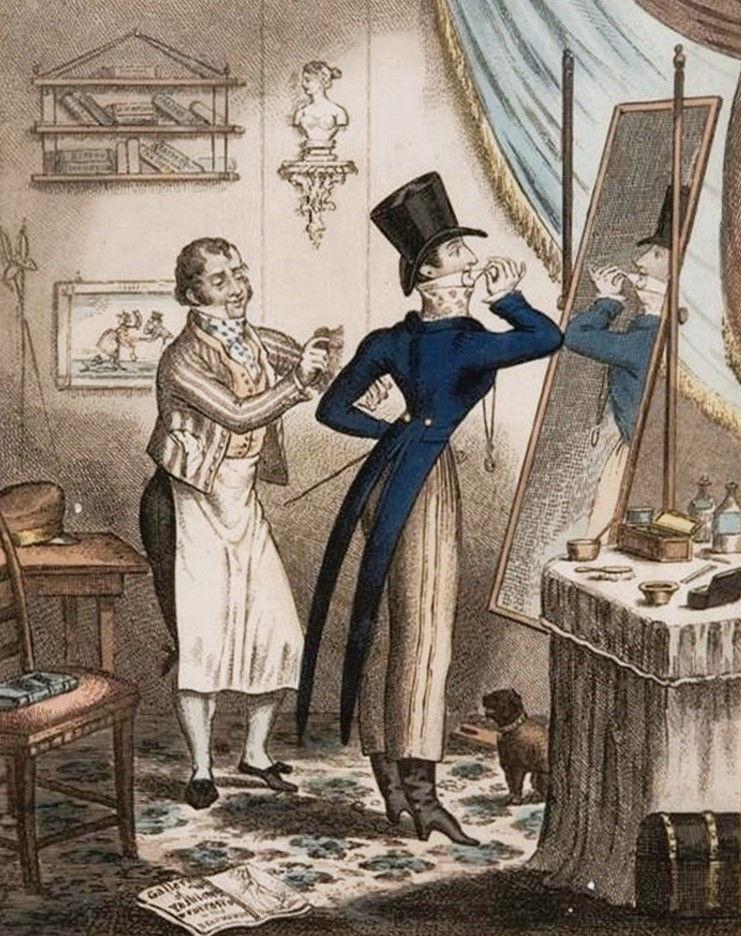
No one popularized men’s corsets more than George IV during his years as the Prince Regent.
Known for his extravagant wardrobe and love of luxury, George IV reportedly wore corsets to create a slimmer appearance as he gained weight later in life.
His style influenced fashionable men across Britain and Europe.
At the same time, his close associate Beau Brummell revolutionized men’s fashion with impeccably tailored clothing, crisp shirts, and understated elegance. While Brummell advocated a natural look, many men still used lightly boned corsets beneath their clothing to achieve the ideal silhouette.
Military Influence
Military uniforms demanded discipline and precision.
Some officers wore lightly structured corsets or waist belts beneath their uniforms to:
- Support long hours in the saddle
- Improve posture
- Enhance the appearance of fitted jackets
- Reduce fatigue during ceremonies
The result was a commanding, athletic appearance that became associated with leadership.
Corsets Were Also Medical Devices
Not every man wore a corset for fashion.
Doctors prescribed supportive corsets for conditions such as:
- Back pain
- Spinal injuries
- Poor posture
- Hernias
- Recovery after injuries
These supportive garments functioned much like modern orthopedic back braces.
The Industrial Revolution Changed Men’s Fashion


By the late 1800s, men’s fashion began shifting toward practicality.
Several factors contributed to the decline of men’s corsets:
- Industrial work required greater mobility.
- Simpler business suits became fashionable.
- Athleticism became the new masculine ideal.
- Mass-produced clothing emphasized comfort over rigid shaping.
By the early 20th century, most men had abandoned corsets except for medical use.
The Rise of the “Health Corset”
Interestingly, corsets didn’t disappear overnight.
Manufacturers introduced lighter versions marketed as:
- Athletic supporters
- Abdominal belts
- Health corsets
- Posture correctors
These products promised improved posture and back support rather than dramatic body shaping.
Many modern posture braces trace their design back to these garments.
Today’s Men’s Corsets
Although rare in everyday fashion, men’s corsets are still worn today for:
- Historical reenactments
- Theater and film costumes
- Formal historical dress
- Gothic and alternative fashion
- Cosplay
- Medical back support
Contemporary designers have also experimented with corset-inspired menswear on fashion runways, challenging traditional ideas about gender and clothing.
Fashion Has Always Evolved
The history of men’s corsets reminds us that ideas about “masculine” and “feminine” clothing are constantly changing.
High heels, lace, wigs, jewelry, makeup, stockings, and corsets have all been worn by men at various points in history. What society considers appropriate dress has often reflected culture and fashion more than any fixed rule.
Fun Facts
- Men’s corsets were often called “stays” or “waistcoats with stays” rather than simply “corsets.”
- Some Regency gentlemen measured their waists to ensure they matched the latest fashion trends.
- Wealthy men sometimes had custom-made corsets created by the same artisans who made women’s corsets.
- Early bodybuilders in the late 19th century largely rejected corsets, promoting muscular physiques instead.
Final Thoughts
The image of the corset as exclusively women’s clothing is a relatively modern idea.
For centuries, men wore corsets to improve posture, enhance tailoring, support their backs, and achieve the fashionable silhouette of their time. Kings, noblemen, military officers, and wealthy gentlemen all embraced garments that many people today mistakenly assume were never part of men’s wardrobes.
Fashion history is full of surprises, and the story of men’s corsets is a reminder that clothing trends—and ideas of masculinity—have always evolved.
The next time you think of a corset, remember: it wasn’t just a woman’s garment. For generations, it was an essential part of a well-dressed gentleman’s wardrobe.